a complete history of the brisbane youth music scene · part 2 of 5 · 1980 to 2011
Radio Silence
chapters two and three · reading time about 9 minutes
Chapter 2: Radio Silence
Information about the scene after The Saints left is harder to find, and most of what survives comes through 4ZZZ and the people around it, so the record of this era is tinted by the one institution still keeping one. There wasn't a unified scene anymore, just cliques and groups attached to this bar or that pub. The fun had died down.
What happened is the trade that quietly ends every wave of this story. Pubs worked out that rock and roll pulled crowds, and started paying bands to play. Once a band can get paid at a licensed venue there is no reason to rent a hall and run your own door, so the people old enough to take the money took it, punk softened into pub rock, and the only people left outside were the ones the pubs legally couldn't let in. The under eighteens went back to having nothing, and the all ages scene went quiet for the first time.
It has gone quiet the same way every time since.
The decade wasn't empty. The Go-Betweens, formed by Robert Forster and Grant McLennan out of a UQ drama class, made indie pop that shimmered like the light through the venetians, and the sound got a name, the Striped Sunlight Sound. Even they started DIY, pressing 'Lee Remick' on their own Able Label in 1978 before Brisbane had any idea what it had produced. A goth culture spread through the alternative cliques in the 80s, the swampies, dressed in head to toe black through sweltering summers, holding down territory outside the Hungry Jacks on Queen Street Mall, which caused petty rivalries with the punks who had previously laid claim to that hangout spot, and running club nights that moved venues every few months and left almost no record behind. Stories of the old scene became almost legendary, which is what happens to scenes that don't write anything down.
The institutions took their hits. The Queen's Hotel in Spring Hill, the era's main live venue, lost its entertainment licence over noise complaints and shut on 15 March 1979, and the all ages Joint Efforts gigs moved to Cloudland Ballroom in Bowen Hills, the white dance hall on the hill where half the city's parents had met each other. On 7 November 1982 the government sent the Deen Brothers in before dawn and Cloudland was rubble by sunrise, no heritage process, no warning, the most famous demolition in Brisbane's history and the clearest statement of what this city thought its own culture was worth. The oppression hadn't waned. In 1983 local activist Tony Kneipp put together a band called The Parameters to record 'Pig City', a song intended as 'throwaway satire' about the October state elections that year. Recorded at 4ZZZ, the station 'thrashed the song to death' until it outgrew the joke and became an anthem the old scene and the new one both claimed.
The Bjelke-Petersen government fell in 1987 under the weight of the Fitzgerald Inquiry; in December 1988, graveyard shift, a group led by Victoria Brazil, a nineteen year old National Party member who had just won the UQ student union presidency, stormed the 4ZZZ building in an attempted eviction, and the station's supporters occupied it until the signal was safe, sound, alive. 4ZZZ moved to Toowong in 1989, then bought the old Communist Party building at 291 St Pauls Terrace in the Valley in 1994, where it broadcasts its message of 'agitate, educate, organise' to this day on 102.1 FM. Under the Liquor Act the rules stayed the same, just with a different name. Under eighteens stayed barred from licensed premises, an all ages gig needed an impossible 'exemption' to play their game, and as gig venues funded by alcohol became the standard, the wall between young people and live music reached its full height.
Chapter 3: Rise of the Scene Kids
A more recognisable demographic emerged in the 90s. City rats, as they were called, congregated near the record shops, King George Square and Queen Street Mall, the city being the easiest place for young people from different schools to meet. They skated, hung out, got moved on, came back—just like the scene kids doing the same today. All ages gigs happened where the kids already were, in the parks, Paddington Skatepark among them. The same ground the city rats once infested, before the council tore it up, became the concrete ramp the 2020s scene careens on; the city centre held as the meeting place across two generations of alternative kids.
The 90s also produced the thing this book owes its existence to. In 1990 a bloke named Mark Donahoe, who everyone called Batsy, started a photocopied zine called BUMS, the Brisbane Underground Music Scene, on the theory that Brisbane was full of brilliant bands getting ignored and somebody ought to put out a little paper, even a photocopied one, that treated the local stuff like it mattered. BUMS was not even the first to try; back in the punk years Clinton Walker's fanzine Pulp had reported the Leftovers and reviewed their Sandgate Town Hall gig, the scene writing itself down as far back as its first bands. Adine Barton, who would go on to manage Custard, edited it through the early 90s alongside Screamfeeder's Kellie Lloyd. Batsy described what he was making as a primary source document of the city's culture, written with enough empathy that a reader would know what it felt like to be there. It ran on the only economy the underground has ever had, benefit gigs, bands playing free, venues buying bigger ads when an issue nearly sank it. Thirty years before this magazine existed, BUMS had already written its mission statement, and the conditions it worked against, no rooms, no money, a street press looking the other way, have not changed since.
The hall gigs never stopped entirely either. One submission to this edition remembers the 15th of October 1995, a local community hall, a first band called Dead Gypsies playing post punk that was half Cure and Joy Division covers, 'first gig as a band and could probably tell'. He was nineteen. Thirty years later he wrote it down for this book. 4ZZZ spent the decade trying to find its feet again, displaced from the student audience that built it. That was the 90s for the scene in one institution; the first spark long gone, the infrastructure to replace it not built yet, the gap filled with festivals that drew people there mostly to drink, and improvised gigs around bands that lasted a summer.
The all ages infrastructure of the decade was thin but real. Livid began in 1989 at the University of Queensland in front of between 1,500 and 2,000 people and grew into the city's alternative festival at Davies Park in West End. 4ZZZ ran Market Day across various parks, a sprawling gathering of bands and stalls the station had put on as a fundraiser since the early 1980s, bands a regular fixture from 1988, grown into 4ZZZ's signature alternative festival, drawing a crowd reported over 8,000 at its peak. On 19 October 1996 the spring edition, billed Cybernana, became the scene's next collision with the police. Rain earlier in the day had made the PA unsafe, and when it was cut the crowd turned; around 8.20pm the riot squad swept the park with mounted officers and dogs, and seventy two people were arrested. The scene remembers it as a police riot. The Criminal Justice Commission investigated for over a year and ruled that the crowd had become an unlawful assembly and that the police response was neither excessive nor unreasonable. Both versions are still on the record, and they do not agree. Market Day was never the same again; the last one, Bananageddon, came in October 2002.
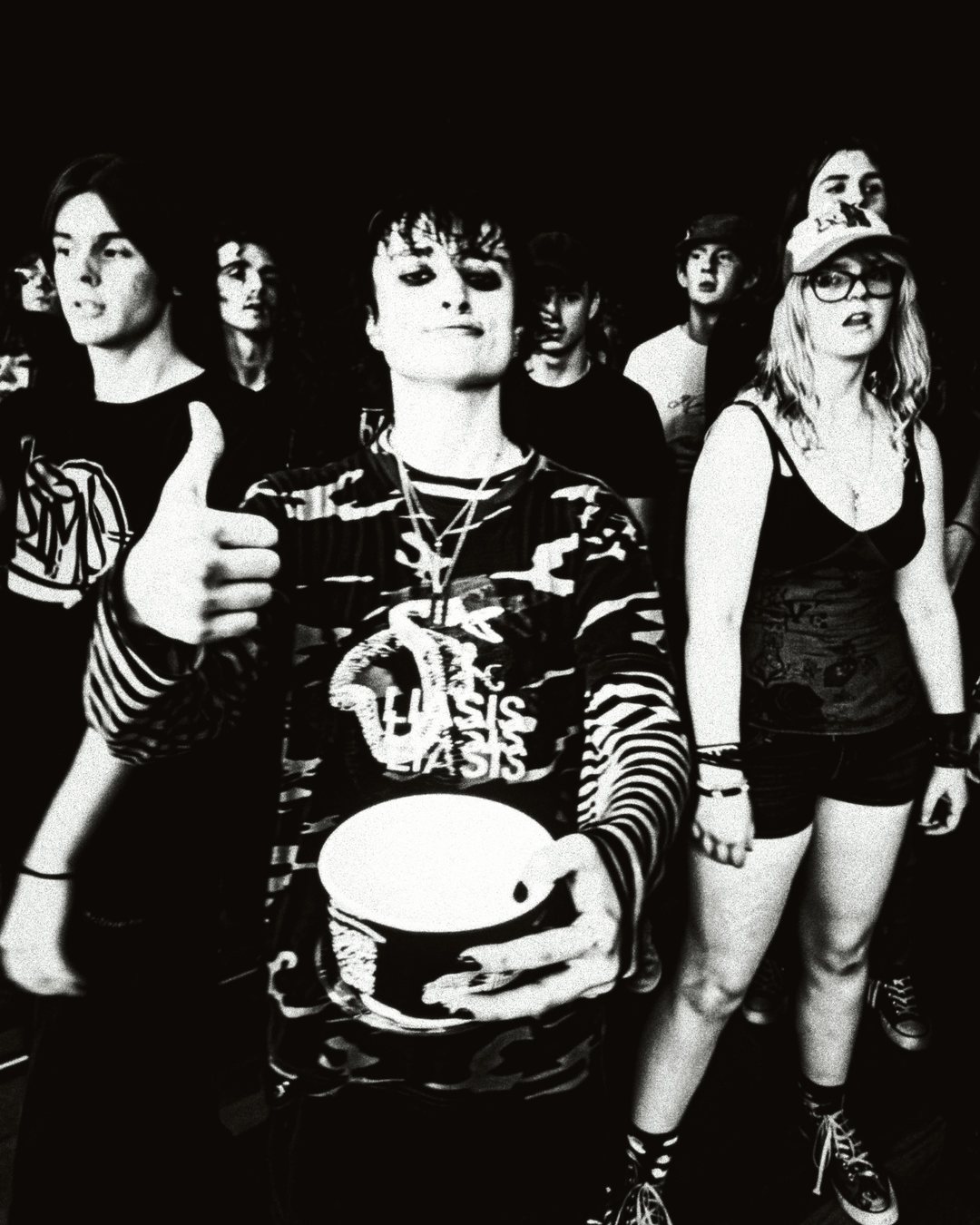
West End in those years was becoming the hipster urban village it was before it got gentrified, re-gentrified, and then became whatever you want to call it; students moved into cheap deindustrialised streets, and out of the share houses and the Valley's quieter nights an emotional offshoot of the band scene took shape. In the back half of the 2000s Brisbane had a proper emo wave, midwest emo before anyone here called it that, indie rock made more technical and more felt; the rhythm of the life was the Valley on weekday nights and house shows on the weekend. The Red Room out at the uni was the main venue, and the spiritual centre was a weird shed in Coorparoo that the emo kids used as a cheap recording studio and gig venue. The bands were Arrows, The Paper and the Plane, In Sepia and Inside the Whale, plus names like Space Between Trains, Francis and Intimate With Emily that survive now only in the memories of the people who were there. It was Club 76 again with different haircuts, the same cheap forgotten venues pressed into service because the 'proper' ones wouldn't have you, and it was in perfect timing with the rise of the mall goth subculture, swept fringes and MySpace networking, sightings in every Garden City and Myer Centre, and all ages crowds sneaking into venues or listening from the footpath.
In 2008 Campbell Newman's council razed the fountains and gardens of King George Square, and when it reopened the next year people were appalled by how hideous it was. The new ramp became the hangout anyway, along with the spot behind the church across from it which the early-2020s scene would rechristen Churchie, and the ramp even held the odd gig for the emo crowd. Kids met at Rocking Horse after school, to the lasting irritation of the owner, while Queen Street Mall took to blasting classical music to move them on; they headed to Chermside, 'late nights at Chermy', and spent Friday nights at the Botanic Gardens, which they, and we still do, call Botangs, or Bat Park. The scene's social map was as alive as it had ever been.
The music underneath it was dying, and the cause of death is worth recording precisely because it repeats.
The Valley venues that hosted emo shifted club-centric as the nightlife economy consolidated; by 2011 one bar next to a cabaret club was carrying what was left. Without venues there was no way to recruit new people, the friend groups that remained hardened into cliques, and the wave ended the way the first one had, not with a raid but with a door that quietly stopped opening.
end of part 2 part 3, the casualty years, is live